
OUTSIDERS BLOG
when life gets busy, this is usually the first to go
For a lot of adults, taking care of themselves is one of the first things to disappear when life gets full.
Not because they don’t care.
Not because they’re lazy.
And not because they’ve stopped wanting to feel better.
But because when work gets crazy, the kids need more, schedules get packed, and stress starts piling up...
something has to give.
And for a lot of people, it ends up being their health.
Workouts get skipped.
Sleep gets worse.
Meals get more random.
The routine that once felt manageable starts to fall apart.
And before long, the thought becomes:
“I just need to get back on track.”
If that sounds familiar, you’re not alone.
Honestly, this is one of the most common things we see.
Not just with people who are trying to get started for the first time—but even with people who know how good they feel
when they’re consistent.
Because the truth is, consistency is easy when life is smooth.
The real challenge is staying connected to your health when life is not.
And that’s where most people struggle.
The problem usually isn’t motivation
A lot of people assume that if they’ve fallen off, the answer is to “get more motivated.”
But motivation usually isn’t the issue.
Most people still want to feel better.
They still want:
• more energy
• more confidence
• less stress
• better habits
• and a body that feels strong and capable
The issue is usually something deeper.
They’ve lost:
• structure
• momentum
• support
• rhythm
And once that starts to happen, it becomes easy to spiral into the mindset of:
• “I’ll start again next week”
• “Things are just too crazy right now”
• “I need to get my life together first”
But if we’re being honest... life usually doesn’t magically calm down.
There’s always another busy week.
Another stressful season.
Another reason to put yourself last.
And that’s why waiting for the perfect time almost never works.
What actually helps people stay consistent
What tends to work best is not some huge reset or all-or-nothing comeback.
It’s usually something much simpler.
1. Lower the pressure
A lot of people struggle because they think “getting back on track” means they need to suddenly become perfect
again.
Meal prep every meal.
Train five days a week.
Never miss.
Lock all the way in.
That mindset sounds intense... but for most adults, it’s actually what keeps them stuck.
The better move is usually:
• show up once
• rebuild a little momentum
• stack one or two good days
• stop making it dramatic
That’s where consistency actually starts again.
2. Remember that progress doesn’t require perfection
You do not need to be “all in” to move forward.
You just need to stop disappearing from the things that help you feel like yourself.
That might mean:
• getting back to class a couple times this week
• reaching out for help
• cleaning up one habit
• or simply recommitting before things drift even further
That counts.
3. Stop trying to do it alone
This is a big one.
A lot of people are trying to “figure it out” by themselves while also juggling:
• work
• kids
• schedules
• stress
• responsibilities
• and a million mental tabs open
That’s hard.
And honestly, sometimes what people really need is not more discipline.
They need:
• support
• accountability
• structure
• and a path that fits their life
That’s often what makes the difference.
A reminder for our members:
If you’re reading this and you’ve been a little off lately...
This is your reminder that you do not need to wait until next Monday, next month, or some magically less-busy
season to reconnect.
Just come back.
No guilt.
No overthinking.
No “I need to get back in shape first.”
Just reconnect.
One workout.
One week.
One step back into rhythm.
That’s all it takes to start building momentum again.
And if you’ve actually been doing a great job staying consistent lately...
This is also a good reminder that there’s probably someone in your life who needs to hear this.
A spouse.
A sibling.
A friend.
A coworker.
Someone who keeps saying they want to start but keeps putting themselves last.
And honestly, they may not need a big speech.
They may just need someone to tell them:
“You don’t need to wait until life calms down. You just need to begin.”
That message can go a long way.
Final thought:
When life gets busy, taking care of yourself is usually one of the first things to go.
But it doesn’t have to stay that way.
You do not need a perfect season to begin again.
You do not need to have it all together first.
You do not need to “earn” your way back into taking care of yourself.
You just need to reconnect before more time passes.
And if someone you care about has been struggling to get started...
Send this to them.
They might need the reminder more than you realize.
Learn what Murph is, why CrossFit gyms honor Hero workouts, and how anyone can participate regardless of fitness level.

After stepping on stage for his first men’s physique competition, Joseph Perez reflects on discipline, growth, and transformation.
Six years ago I walked away from a 15-year corporate career to bet on myself. These are the six biggest lessons that decision taught me about growth, leadership, fitness, and life.
Struggling to stay consistent with nutrition? Learn why most plans fail and how the 800g Challenge helps you build simple, sustainable habits.
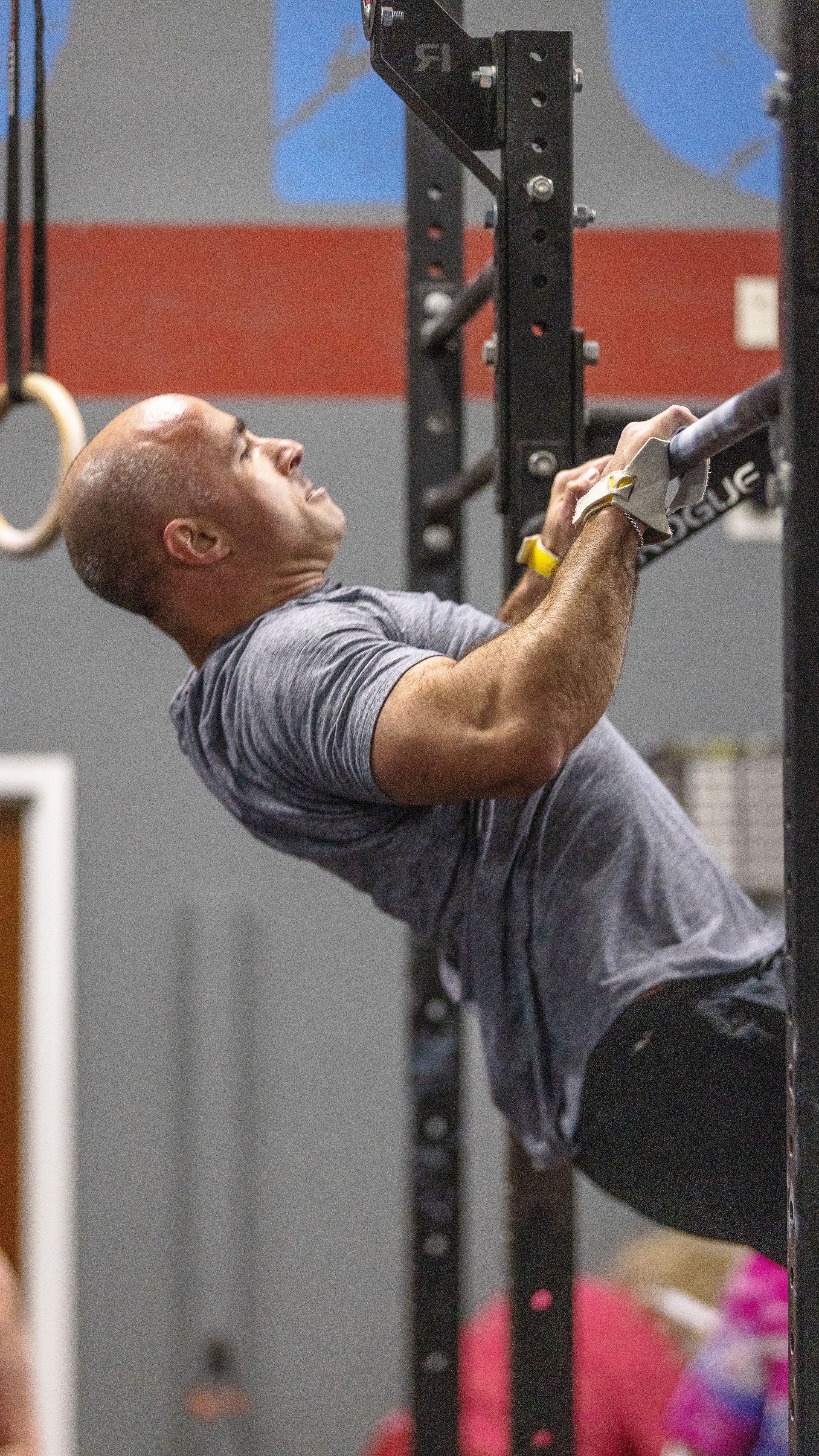
the pull-up problem: why so many people want one - and how to get there

Outsiders CrossFit is introducing Goal Review Sessions and expanded personal training to help members break through plateaus and build fitness for life.

Why Most Fail—and What Consistent People Do Differently Every January, gyms fill up. People are motivated. Hope is high. Goals are written down. And by February? Most of those resolutions are gone. So the real question isn’t “Should I set a New Year’s resolution?” It’s this: Do New Year’s resolutions actually work? The honest answer is: sometimes—but not for the reason people think. As a CrossFit affiliate owner, I’ve watched hundreds of people start strong, fade out, restart, disappear, and eventually come back again. Over time, one thing has become very clear: Resolutions don’t fail because people are lazy. They fail because people misunderstand what actually creates change. WHY MOST NEW YEAR’S RESOLUTIONS DON’T WORK Studies consistently show that a large majority of New Year’s resolutions fade by February. Not because the goals are bad, but because the approach is flawed. Here’s why most resolutions don’t stick. 1. They’re built on motivation, not structure Motivation is emotional. Structure is practical. Motivation gets you started. Structure keeps you going. When people rely on motivation alone—“I’m fired up, this is my year”—they struggle the moment life gets busy, stressful, or unpredictable. And life always does. 2. They’re outcome-focused instead of behavior-focused Most resolutions sound like this: Lose 20 pounds. Get in the best shape of my life. Be healthier. Those are outcomes—not actions. You can’t do “lose 20 pounds” on a Tuesday. You can show up to class. When outcomes don’t move fast enough, people get discouraged and quit. 3. They’re all-or-nothing Miss a workout? “I’ve already blown it.” Eat one off-plan meal? “I’ll start again next week.” One imperfect day becomes permission to quit entirely. 4. They don’t account for real life Work schedules change. Kids get sick. Energy dips. Stress shows up. Most resolutions are written for a perfect version of life that doesn’t exist. SO… DO NEW YEAR’S RESOLUTIONS EVER WORK? Yes—but only when they evolve. Resolutions work when they become commitments to a process, not promises of perfection. The people who succeed don’t treat January as a “make or break” moment. They treat it as a recommitment. They understand something important: Progress isn’t created by big declarations. It’s created by repeated, imperfect action. WHAT ACTUALLY WORKS INSTEAD At Outsiders CrossFit, the people who see real, lasting change do a few things differently. 1. They focus on consistency, not intensity They don’t aim to train every day. They aim to train 3–4 days per week. They don’t try to be perfect. They try to be reliable. That’s enough to build strength, improve conditioning, lose body fat, gain confidence, and improve energy. Consistency beats intensity every time. 2. They redefine success Success isn’t crushing every workout or PR’ing constantly. Success is: Showing up when it’s inconvenient. Modifying instead of skipping. Returning after a missed week. That mindset removes pressure—and pressure is what breaks most resolutions. 3. They expect struggle The most successful members don’t avoid hard days. They expect: Low-motivation days. Busy weeks. Stressful seasons. Instead of quitting, they adjust. They don’t ask, “Can I do everything perfectly?” They ask, “What’s the best choice I can make today?” 4. They don’t do it alone People are far more likely to stick to habits when they feel supported, coached, and accountable. That’s why community-based training works better than isolated plans or solo gym memberships. WHY THE “FRESH START” OF JANUARY STILL MATTERS January does matter—but not because it’s magical. It matters because it creates a psychological reset. People are more open to change because it feels like turning a page. The mistake is thinking January has to be perfect. It doesn’t. January just has to be intentional. When people use it to recommit instead of reinvent, simplify instead of overhaul, and build routines instead of chase results, it becomes powerful. WHAT WE BELIEVE AT OUTSIDERS CROSSFIT We don’t believe in “New Year, New You.” We believe in: New year, recommitted you. The version of you who keeps showing up, learns from setbacks, trains for life, and values progress over perfection. That’s why our focus isn’t just January. It’s February. March. June. October. Fitness that lasts. IF YOU’VE FAILED AT RESOLUTIONS BEFORE, YOU’RE NOT BROKEN If you’ve tried resolutions before and always fell off, that doesn’t mean you lack discipline. It usually means you were doing too much, expecting too much, or doing it alone. You don’t need another extreme plan. You need a sustainable one. You don’t need more motivation. You need a system that supports you when motivation fades. FINAL THOUGHT Do New Year’s resolutions work? They work when they turn into habits. They fail when they stay as promises. If you’re looking for a place that meets you where you are, coaches you through real life, and helps you build consistency without guilt—that’s what we aim to be. Not just a gym. A home for people who want to keep going, especially when it’s hard. And whether it’s January or July… It’s always a good time to recommit.

Enjoy the holidays without losing progress. Use these simple strategies to stay consistent, manage food, reduce stress, and hit 3–4 workouts each week.

About The Outsiders Dispatch
Every day, we publish two free workouts—Limited Equipment and No Equipment—that you can do anywhere: at Oregon Ridge, on the NCR Trail, in your garage, or here with a coach at Outsiders CrossFit.
We also share weekly conversations on training, nutrition, and real life on our Outsiders Unloaded podcast, plus free coaching tips on YouTube.
This is for Sparks and the surrounding community—built to help you stay fit for life, out of the ER, and thriving with your people. Enjoy.
The post The Outsiders Dispatch 10/29/2025 appeared first on Outsiders CrossFit.

Motivation fades. Life gets busy. But those who keep showing up—day after day—discover what real transformation feels like. Here’s what happens when you stop chasing perfection and start building consistency.
The post Just Keep Showing Up appeared first on Outsiders CrossFit.